
The Saga of the Skrei: From Norwegian Waters to Professional Kitchens
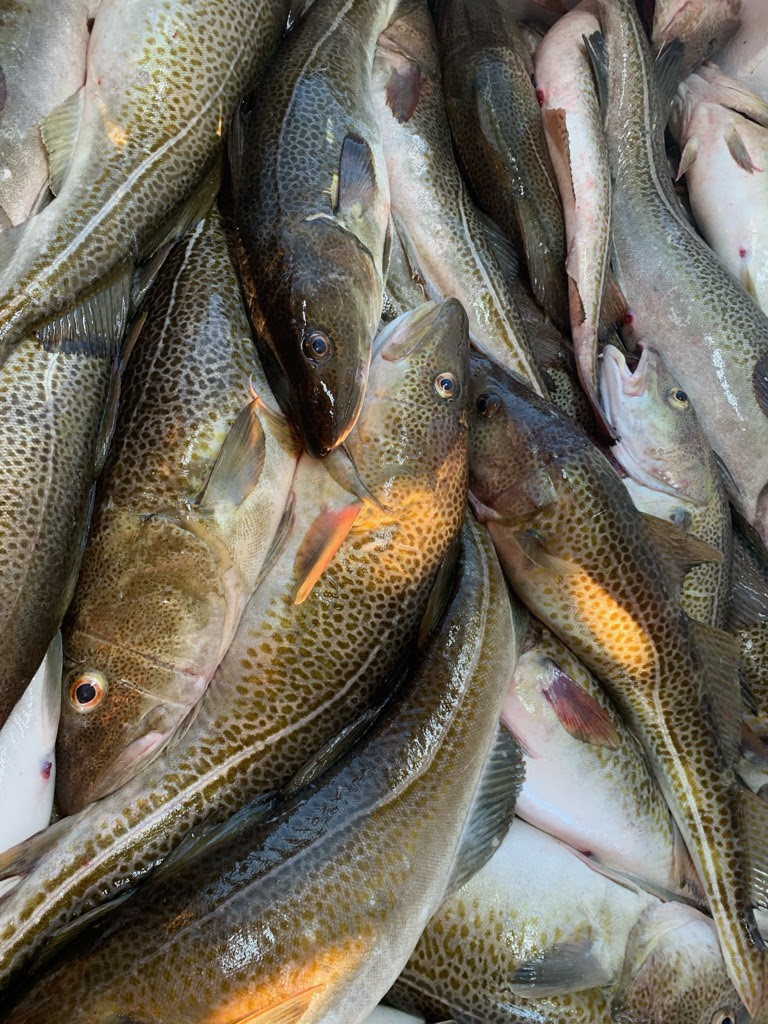

Winter is synonymous with world-class cod, and among all the amazing cod out there, Skrei really is in a league of its own.
Unlike regular cod, Skrei is a migratory fish. It spends most of its life up in the Barents Sea, feasting and growing BIG. And I mean seriously big. The largest Skrei ever caught was 1.62 metres long and weighed a wild 55 kilos!
BOOM!
Journeying about 2,000 kilometres south
Every year, when the Skrei needs to spawn, it travels from its all-you-can-eat up north, journeying about 2,000 kilometres south to its spawning grounds along the coast of Northern Norway, especially around Lofoten. This isn’t just any old cod—Skrei is the only migratory cod species, and because of that massive journey, it’s become longer and more muscular than your average cod. That’s why we call Skrei the Formula 1 of cod.
Today, the Skrei stock is healthy and very well managed. The population peaked in 2013, giving us the largest spawning stock ever recorded, but since then, it’s been declining. That’s normal—it often happens after a big boom year. Our Norwegian friends, who are pretty much the gold standard in fisheries management, have sensibly lowered quotas in response.
Looking ahead, Norway’s fisheries research council is already recommending higher Skrei quotas for 2027 and 2028, thanks to some strong new generations entering the fishery. And it’s not like this year is a write-off—no! The recommended quota for this year is a whopping 311,587 tonnes. That’s 311 million kilos, plus a bit more!
But none of this would have been possible without Norway’s punchy and courageous fisheries minister, Eivind Bolle, back in 1979. We’ve saluted him before on Fiskerikajen Update, and for good reason!
So, here’s a little flashback to our November 2022 episode...
Skrei was probably at its limits already by the 1950s, but fishing pressure just kept going up all through the 1960s—thanks mostly to foreign trawlers working the Barents Sea. That brought the record catch in 1969: a jaw-dropping 1.2 million tonnes of cod. That’s 1.2 billion kilos in just one season.
CRAZY!
By the late 1970s, it became clear that the data being used to track cod stocks was way off. All those juvenile cod and little ones caught by trawlers weren’t being counted. The new calculations showed that those massive young year classes had been seriously overfished.
That’s where Eivind Bolle’s gutsy move came in. In winter 1979, the Skrei breeding stock hit rock bottom. The 1975 year class was critical for survival, so everyone focused on protecting those fish. Then a trawler skipper from Northern Norway called the Fisheries Directorate anonymously to warn about huge catches of just-over-legal-size cod. After some lively discussions, Minister Bolle made a bold decision: a total fishing stop! Huge international headaches, because lots of trawlers from other countries had valid quotas. If fishing had carried on, 80–90% of that vital 1975 year class would have been wiped out, and Skrei might well have collapsed—just like the cod population off Newfoundland at the Grand Banks, which never recovered.
By 1990, cod quotas were down to 160,000 tonnes—a massive reduction from, say, 850,000 tonnes in 1978. After even stricter regulations in the ‘90s, the population grew steadily, and in recent years, quotas sit around 500,000 tonnes. That’s a huge number of cod, but the stock can handle it because of careful fishing and good management. The Norwegians really know their stuff—and that’s just plain awesome.
Back to today...
As you might guess, Skrei isn’t just an amazing cod—it’s also a seriously well-guarded brand. Up in Norway, they’ve invested time and money into marketing Skrei cod—so you’ll sometimes see it with a little plastic tag. But honestly, the tag doesn’t define a Skrei. What the tag really shows is that the fish came through one of the authorized cooperatives, and those guys are checked by the legendary Skrei Patrol. Their job is to make sure the high quality is maintained, so European consumers know their Skrei is top shelf.
Here’s a little excerpt from the Skrei Patrol’s quality criteria...
Skrei with the quality label can only be packed between 1st January and 30th April. The fish must be top quality: bled immediately after catching, rinsed thoroughly in clean water, handled with care, and quickly chilled to around 0°C. That keeps quality at its best for longer.
The Skrei label is really a promise among fishers to deliver a highly sought-after quality product. The Skrei Patrol, run by the Norwegian Fishermen’s Sales Organization together with the Norwegian Seafood Council, checks that everyone keeps to the standard and that every fish with the Skrei tag lives up to the rules. The Seafood Council owns the trademark and decides who gets to use it.
We love how Norway works with its marine ecosystems and the fishers who live off them. There’s no doubt the Skrei brand helps fishers and producers earn more per fish—but again: it’s not the label that decides if a cod is Skrei!
The Skrei we buy, mostly through Aalesund and other places where they pack the fish on board the boats—so-called “sea packing”—is also Skrei. We like to buy direct from the fishers rather than through middlemen. A lot of the Norwegian cod coming to Danish auctions right now is also Skrei, even though it doesn’t have the tag. Most of it is from gillnet and longline boats, and it looks as gorgeous and tastes as good as any tagged Skrei.
So! Cod should be on the menu—all winter long! And the whole fish deserves to be used, from head to tail, including roe and milt. We’ve got it all, in one way or another!
Want to know more?
Contact us to get set up with with the season’s best fish and shellfish.

Podcast: Fiskerikajen Update
You can also catch our regular seasonal updates as a podcast.Listen here
