
The cod adventure continues — Skrei, quota thinking, and caffeine-strong record fish.
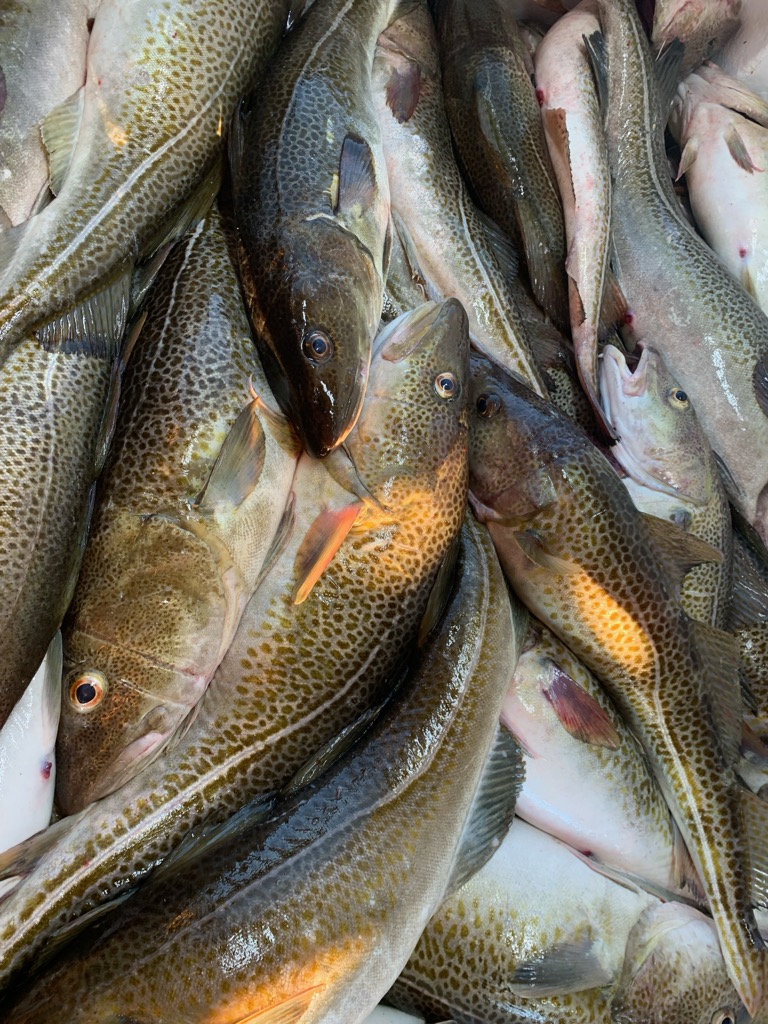

We always start winter with the undisputed king of the North Atlantic: COD!
As you may not have noticed if you’ve been reading along here, cod is one of my absolute favorite fish — both because of its obvious qualities and because of its cultural significance to the people and traditions in our part of the world.
A wonderful fish
Yes, it’s simply a wonderful fish. And it will stay on the menu for at least another month, through March. Even if you might be starting to feel about cod the way you do about root vegetables toward the end of winter and early spring — you’re ready for something new!
But that’s just how it is. We don’t live in a climate where everything is available all the time, and that’s part of the beauty of living at our latitude: you look forward to the changing seasons. Boom.
This year’s cod season has been marked by the major quota reductions affecting cod in our part of the North Sea. It has had a significant impact on how low-impact fishers have worked this winter compared to many winters before.
For these fishers, the amount of cod on their quota has to last the entire year. Even if they would prefer to catch haddock or hake at certain times, they still need cod quota to do so, because cod — even though it is less abundant right now than at other times — cannot be avoided in those fisheries. As a result, many boats that would normally focus exclusively on cod during the winter months have fished for flatfish instead, simply to stretch their cod quota across the whole year.
This change has had a bigger impact than expected. There have been many days with no whole, low-impact-caught cod available at Danish fish auctions, which is why you may sometimes have received headless cod from us when ordering whole fish. Those cod have mainly come from our friends in Norway, where the fishing has been very good this year.
Norwegian skrei has been available since early January, but the truly traditional skrei fishery in Lofoten has only just begun. Here, smaller boats hold the right to fish inshore, and most are of the type called “Juksa.” The term doesn’t refer to the boat itself but to the fishing method: a weight and a line of hooks originally worked by hand, now operated with small electric reels.
Juksa boats are generally one- or two-person operations that handle the entire catch themselves. Every fish is bled immediately after being caught and rinsed in the cold Norwegian water. No wonder these fish are so incredibly delicious!
52 kg!
Despite the simple setup, these boats catch impressive amounts of fish. A one-person juksa catching up to three tons is remarkable when you consider the work required to unhook, bleed, and pack all those fish. You sleep well at night during skrei season.
They all dream of catching a “Kaffitorsk” — or “coffee cod” — and what exactly are the Norwegians talking about? Well, Lofotenposten has run a traditional competition since 1953: any fisher who catches a cod over 30 kg can submit proof and receive 1 kg of Kaffitorsk coffee as a reward.
And something wild happened this year: the more than 20-year-old Kaffitorsk record of 48 kg was smashed by a new record fish weighing an astonishing 52 kg. Incredible!
Cod belongs on the menu right now alongside the beautiful roe, and you shouldn’t expect to order many cod heads — we don’t get those from Norway; they keep them there. And be sure to try cod milt as well. We’ve started working with fishers to bring it ashore, but we’re not selling enough yet, so help us by buying more. It tastes fantastic, and it’s great that the fishers are willing to bring it in.
Want to know more?
Contact us to get set up with with the season’s best fish and shellfish.

Podcast: Fiskerikajen Update
You can also catch our regular seasonal updates as a podcast.Listen here
