
The Cormorants: A Dark Visitor with a Taste for Your Favorite Fish
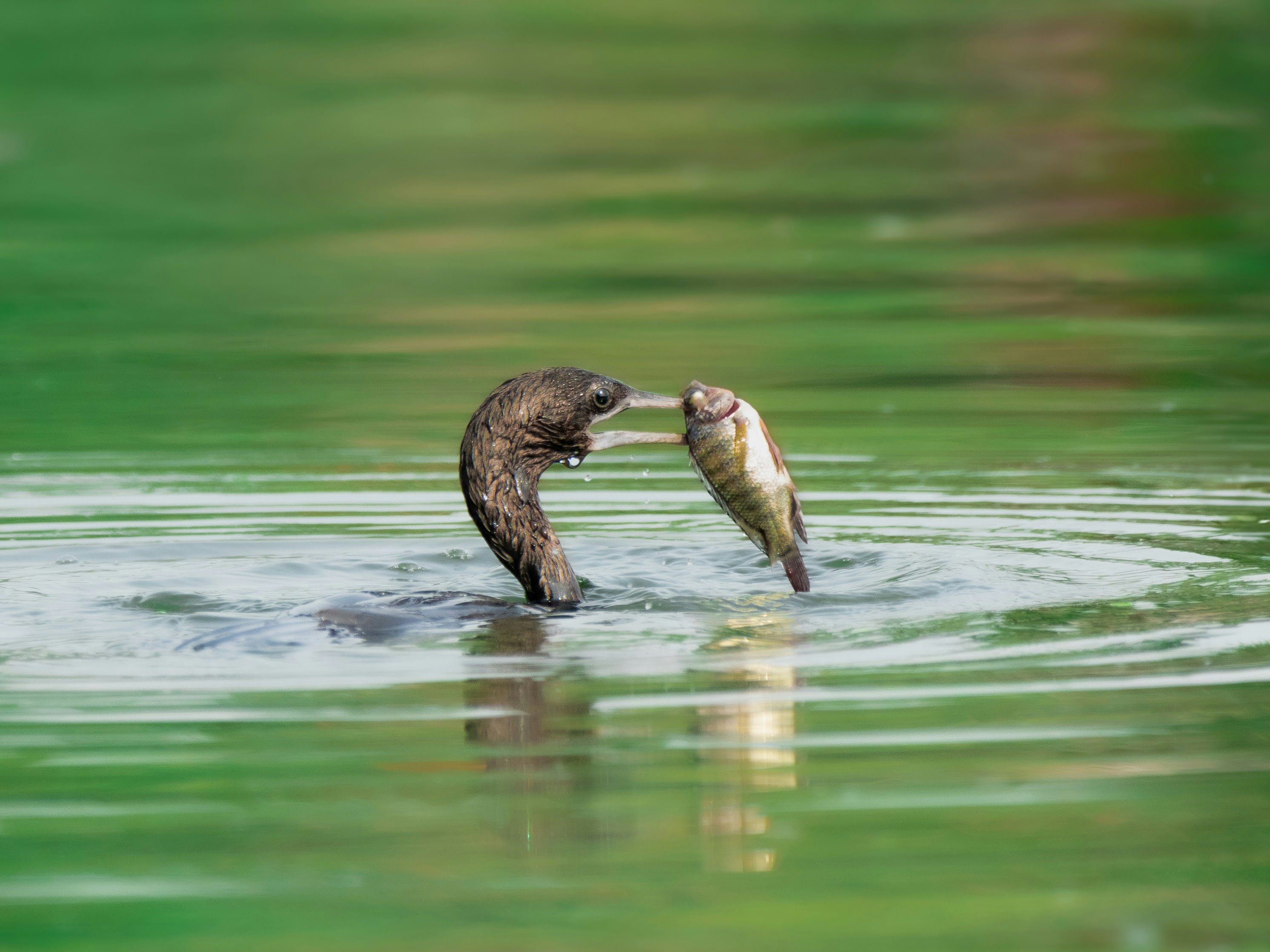

Now, we’re not quite as keen on cormorants as we are on Skrei. The reason we’re mentioning them again is this cold winter in Denmark—it’s here to stay for a while, at least into February. The deep freeze gives our lake fish a break from cormorants, who love to gobble up freshwater fish. Sadly, it puts more pressure on the fish in our rivers and streams.
That’s exactly what happened back in 2009 and 2010 during the last proper cold winters.
That year, all those hungry cormorants discovered they could hunt in streams, since it was tougher on the coast and lakes. They haven’t forgotten since.
Fish stocks in our streams have plummeted
As a result, fish stocks in our streams have plummeted, especially for grayling, salmon, trout, and eels. These rich, nutritious fish are right at the top of the cormorant menu.
In one of Denmark’s biggest rivers, the Gudenå, fish stocks have declined by 90% since 2010. It’s been thoroughly researched and confirmed that cormorants are to blame.
In Denmark, we have 30,000–33,000 breeding pairs of cormorants—and on top of that, about 250,000 cormorants come here to overwinter each year.
Cormorants eat around 500 grams of fish per day. You don’t need a calculator to see how many fish that adds up to in our Danish waters every day!
Along the Danish coasts, loads of studies have mapped cormorants’ effects on local stocks. In Lillebælt, research has shown that cormorants are seriously hammering local cod and flounder—stocks we humans also like to eat, and the fishers want to catch.
A bad trend
A lot has been done in recent years to restrict fishing in the inner Danish waters, and in truth, fishing has also dropped on its own—when fishers can’t make a living, they move on. It’s a bad trend: fewer fishers means ports lose a bit of their culture and become marinas for folks who prefer being on top of the water rather than underneath it.
The good news is that all this research has made it easier to get permission to manage cormorant numbers again, so we can try to restore the balance between cormorants, people, and fish.
We really hope there are chefs out there with hunting licenses who want to help support the aquatic environment. We need you! (In the written version of our newsletter, you’ll find a link on how to get involved in managing cormorant populations.)
Want to know more?
Contact us to get set up with with the season’s best fish and shellfish.

Podcast: Fiskerikajen Update
You can also catch our regular seasonal updates as a podcast.Listen here
